Photos
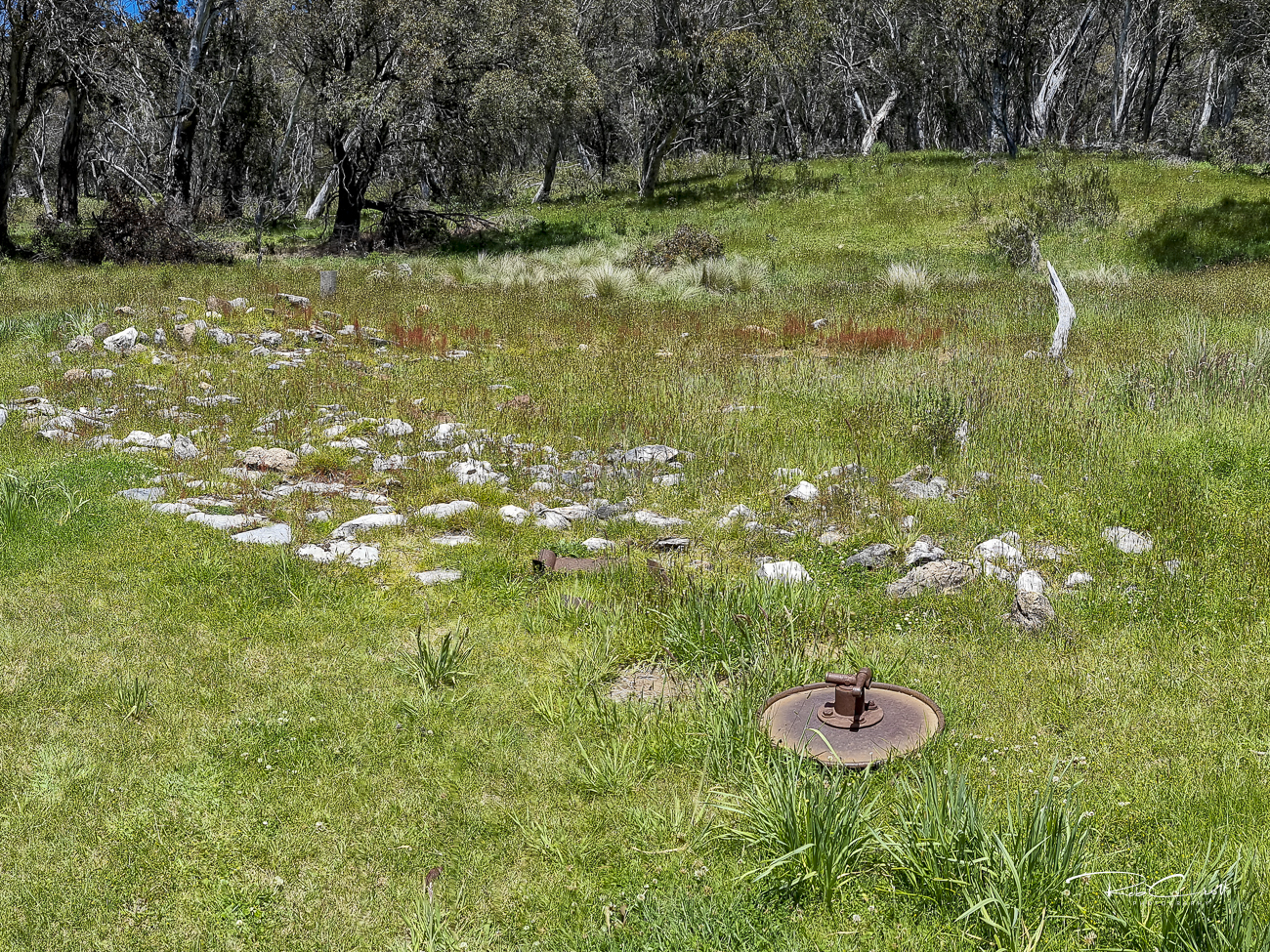
| Built | 1933 |
| Condition | ★☆☆☆☆ (destroyed by fire in late 1990s) |
| Location | Blue Waterholes Road, near Cooleman Plain |
| Alternate Names | Blue Waterholes Homestead |
| 1933 | Built by Bill Harris for himself and wife Irene |
| 1950s–70s | Used by Tom and Molly Taylor; later adopted by Canberra Speleological Society |
| Late 1990s | Destroyed by fire, reportedly caused by illegal 4WD group |
| Present | Site remains; no reconstruction planned |
Harris Hut, also known as Blue Waterholes Hut, was a modest homestead built in 1933 by Bill Harris for himself and his new wife, Irene. Located off the Blue Waterholes Road in Kosciuszko National Park, the hut replaced an earlier structure made of wattle sticks, which later served as a saddle shed. Over time, the site became home to other residents, including Tom and Molly Taylor, and was eventually adopted and maintained by the Canberra Speleological Society (CSS).
The hut measured approximately 7 by 4.5 metres and consisted of two rooms. It was constructed from horizontal slabs with a slab floor, and featured a modified iron flue. Flattened kerosene tins were used under the gables, and the interior was sealed against the cold using hessian, canvas, and newspaper wallpaper—an evocative detail that speaks to the resourcefulness of its occupants.
Harris Hut held deep social and historical value. Phylis Dowling, who lived there until the age of ten, wrote a detailed essay in the hut’s logbook describing daily life, food, and the challenges of early 20th-century alpine living. Sadly, the hut was destroyed in the late 1990s when a group of illegal 4WD users lit an uncontrolled fire. According to the conservation study, the site was not slated for reconstruction.
The hut measured approximately 7m × 4.5m and was constructed of horizontal timber slabs with a slab floor. It featured a modified iron flue and used flattened kerosene tins under the gables. Later additions included hessian, canvas, and newspaper wallpaper to insulate against the cold.
The structure reflected both practical bush craftsmanship and adaptive reuse of available materials.
Stewardship was informally shared between the Canberra Speleological Society and KHA volunteers. The site remains a cultural waypoint, with interpretive potential focused on homestead life and speleological exploration.