Photos


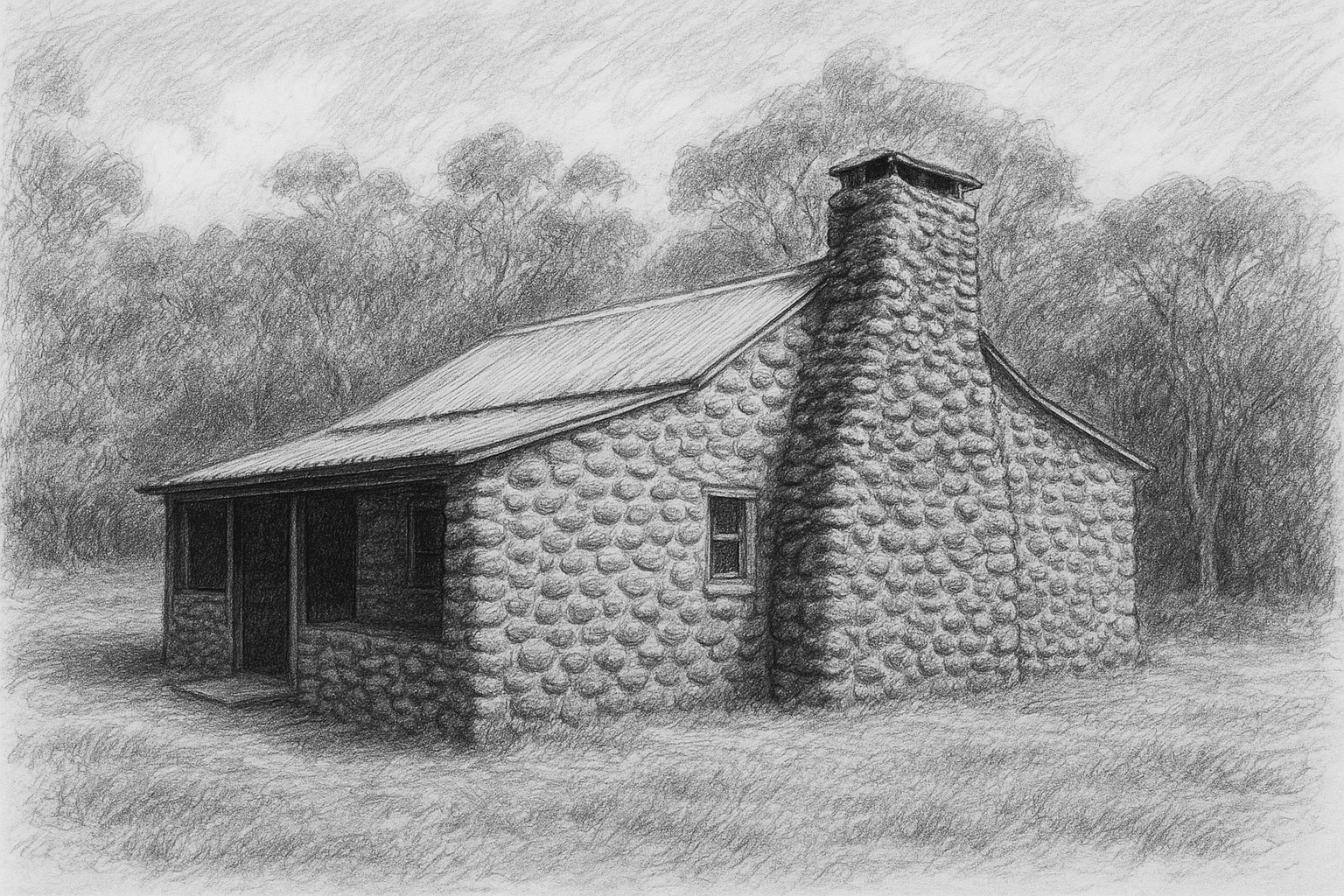
| Built | 1952 by Jim Nankervis and brother |
| Condition | ★★★★☆ (restored; excellent condition) |
| Location | Geehi Flats campground, near Swampy Plains River |
| Alternate Names | Airstrip Hut, Nankervis Hut |
| 1952 | Built by Jim Nankervis and his brother for grazing and fishing |
| 2004 | Rebuilt by KHA, NPWS, and Land Rover Clubs; officially reopened |
| Present | Popular roadside stop and campground shelter |
Geehi Hut, also known as Nankervis Hut or Airstrip Hut, is a distinctive alpine structure located in the Geehi Valley of southeastern New South Wales. Built in 1952 by Ken Nankervis and his brother Jim, the hut originally served as a base for cattle grazing and fishing. Over time, it became a central gathering point for families and recreational users in the region.
The hut is constructed from rounded river stones — a rare building material among Australian alpine huts — giving it a unique and enduring character. It measures approximately 11 by 9 metres and includes three rooms. The floor is a mix of concrete and dirt, and the structure features a substantial fireplace. Originally, the site included additional buildings such as a shed, toilet, and laundry, though only the main house remains today.
Geehi Hut has undergone several phases of use and restoration. In the 1960s, it operated as a youth hostel, and in later decades, it was maintained by volunteer groups and caretakers. A major restoration was completed in 2004, preserving its stonework and layout while improving its structural integrity.
The surrounding area offers excellent access to camping, fishing, and walking trails. It serves as a base for climbing the historic Hannel’s Spur Track, one of the lesser-known but challenging routes to the summit of Mount Kosciuszko. The hut is accessible by foot or standard vehicle, and nearby facilities include toilets, picnic tables, and shaded camping areas along the Geehi River.
Geehi Hut remains a beloved landmark in the Snowy Mountains, valued for its rugged charm, historical significance, and ongoing role in alpine recreation.
Geehi Hut measures approximately 11m × 9m and includes three rooms. It is constructed of river stones over a concrete and dirt floor. The chimney and fireplace are also built of stone. The hut has a pitched iron roof and is one of the few stone huts in the region.
Nearby campground facilities include pit toilets and ample space for tents. The hut is accessible by regular sedan via Geehi Flats.
JIM_NANKERVIS - Interviewed by Klaus Hueneke, 4 March 1981 2
KH: When was that first hut built on the Geehi Flats, right down this end, it was used by the Youth Hostels.
JN: The stone one - that was just before the road went in, in 52.
KH: Across to Dead Horse Gap?
JN: No, it only went to Geehi - Bannon and Glen were the contractors that put that in, for the State Rivers and Don Benson built that hut.
KH: Was he a stockman?
JN: Yes. He built that hut, packed all that cement and everything in there on pack horses before the road was put in.
ERROL SCAMMELL - Interviewed by Klaus Hueneke, 5/3/1982. 3
ES: Mostly tin stuff. With a pack horse you had to take tin food.
KH: You took flour I suppose?
ES: Yes, but mostly bread, make a damper if you had to. When we were mustering cattle out there we used to kill a beast and take flour out. Up in the Geehi hut, Tyrells had a hut up there, and he used to leave his flour hanging up with a wire so the rats couldn't get at it. He had one bit strung up there and he wrote on it "This flour has been poisoned for rats" so as nobody would touch it. Somebody else come along and wrote on the other side "It really is poisoned now". He didn't know whether he could eat it or not. He was a pretty tough man this old Tyrell. He had blokes working for him up there in Geehi. There was one other chap up there possuming - there was a terrible lot of possums..
The hut is monitored by NPWS and supported by KHA volunteers. It serves as a key shelter and interpretive site for visitors to Geehi Flats. Its accessibility and robust construction make it ideal for educational signage and heritage engagement.
Notes from 'Kosciuszko National Park Huts Conservation Strategy' October 20055