Photos
| Built | 1920 (rebuilt 2009) |
| Condition | ★★★★☆ |
| 1920s | Original hut built near Far Bald Mountain |
| 1930s | Harness shed constructed by miner Bill Byatt |
| 1964 | Original hut destroyed by fire |
| 2003 | Harness shed burnt in bushfires |
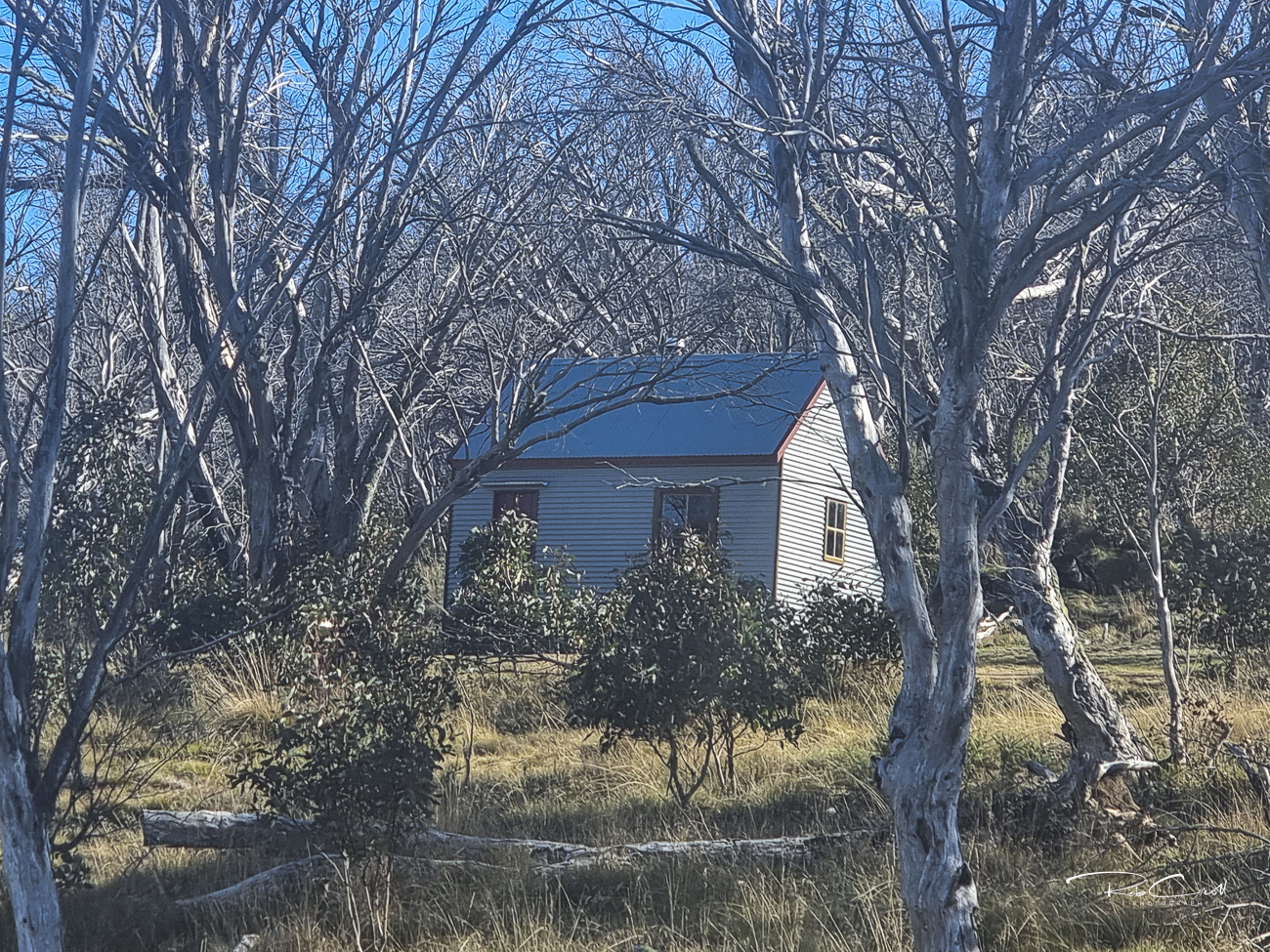
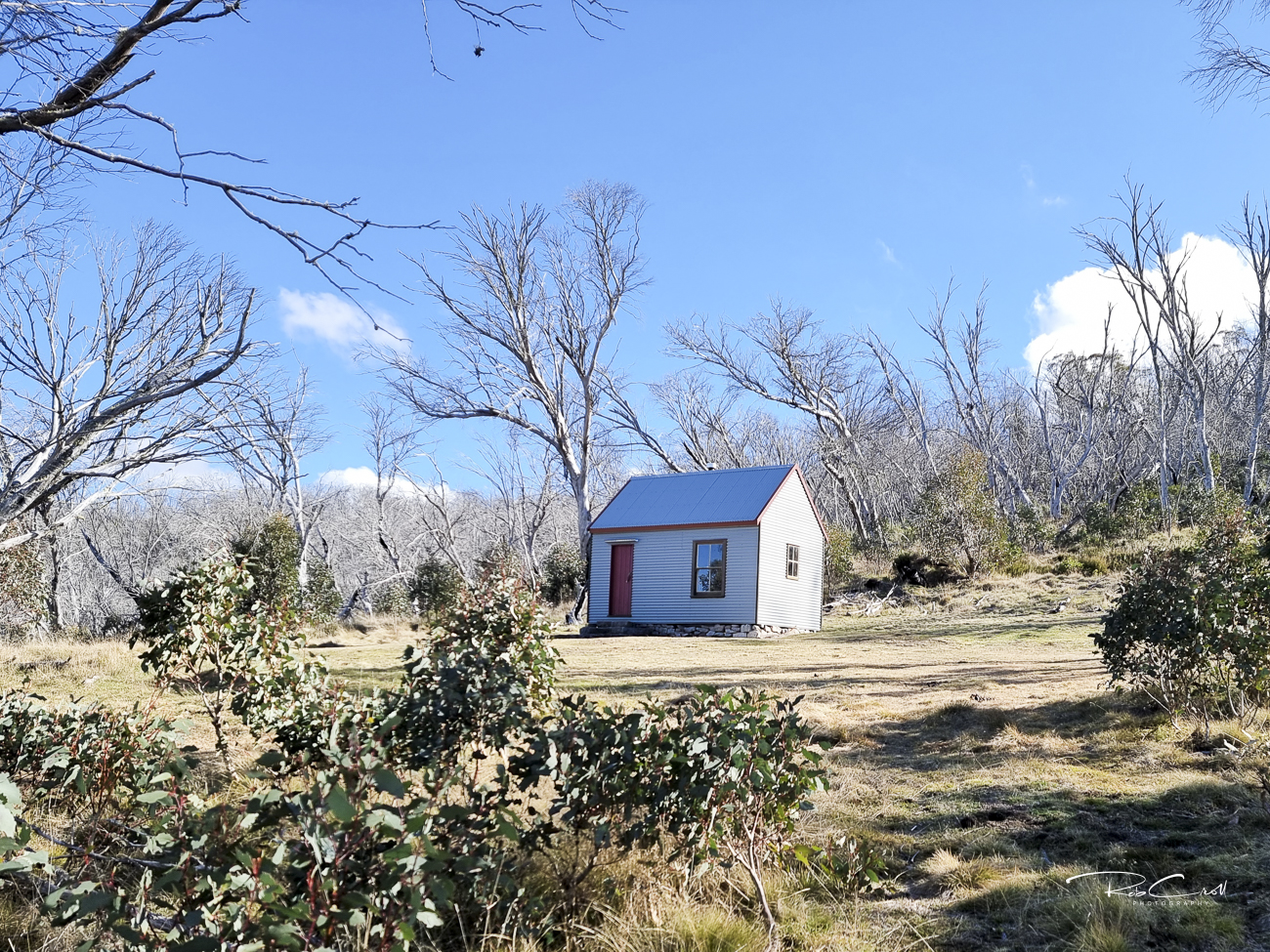
| 2009 | Boobee Hut rebuilt using original footprint and materials |
Boobee Hut’s history is a layered tapestry of alpine grazing, gold mining, and bushwalking adaptation, stretching back to the mid-19th century. The site was active by the 1850s, initially part of the New Maragle Block B squatting run, and soon became a focal point for both pastoral and mining activity. During the Kiandra Gold Rush of 1860–61, miners worked the creek below the hut—later named Diggers Creek—using hydraulic sluicing methods that left visible scars on the landscape.
By the early 20th century, the area was subdivided into smaller snow leases, and in 1917, John Cheney Jr. of Humula acquired a 9,330-acre lease through a ballot. Reportedly disappointed with the outcome, Cheney dubbed it the “booby prize,” a nickname that stuck and evolved into “Boobee.” Cheney ran stock there until the 1940s, and the site became known for its rugged isolation and grazing heritage.
Around 1920, a two-room weatherboard cottage was built—possibly by Cheney or earlier by Bill Byatt in the 1890s—alongside a Salt & Harness Shed and stables. The cottage was described in 1933–34 ski yearbooks as dilapidated but serviceable, with missing windows and no provisions. Mining continued intermittently, with Tom Taylor holding leases from 1932 to 1935, and grazing persisted under Reid & Brooks from 1943 to 1950, followed by McPhie and Fred Fletcher until alpine grazing above 1370m was banned in 1958.
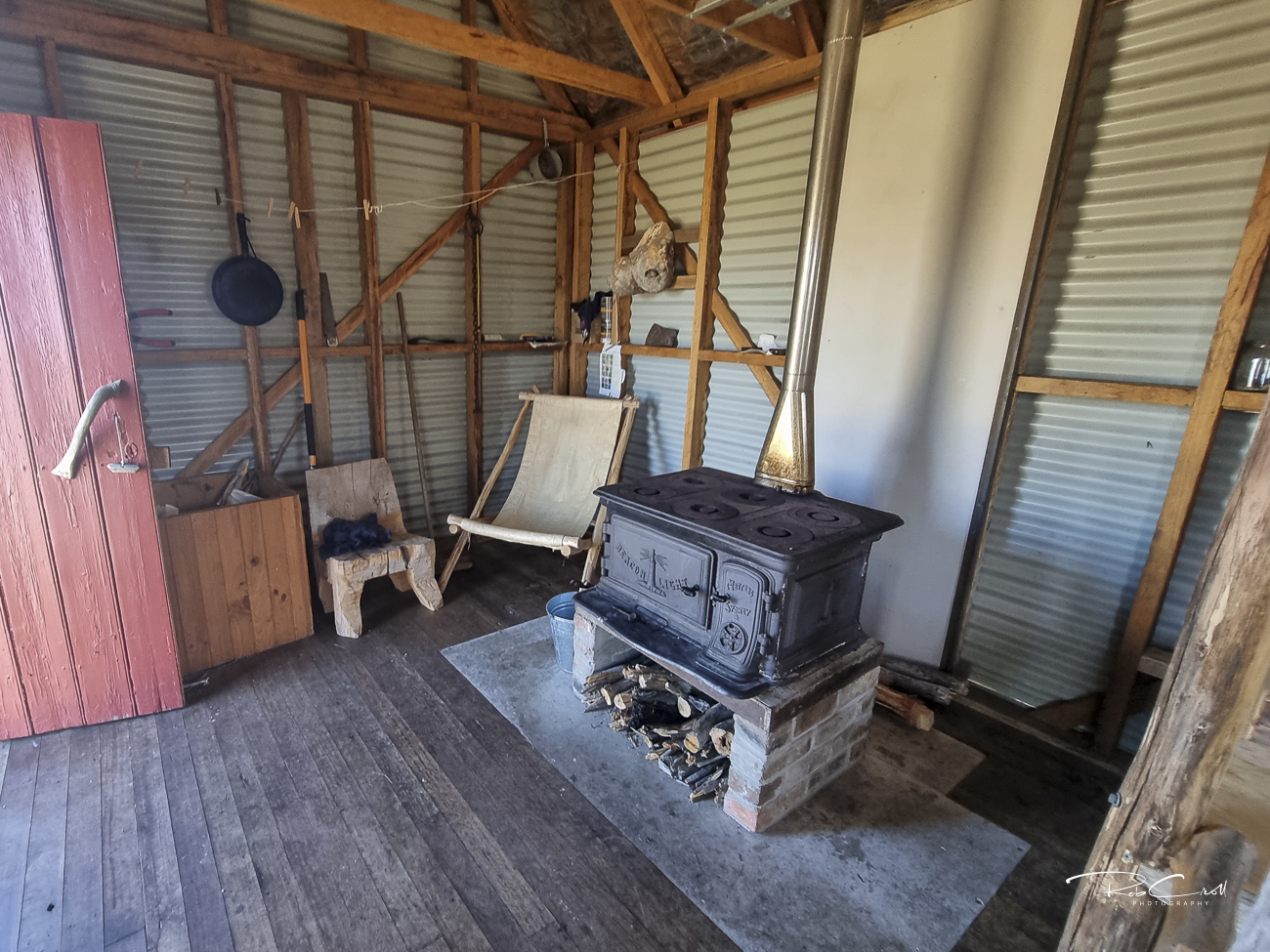
The original cottage burned down in 1964, and in the 1970s, the Canberra Bushwalking Club repurposed the Salt & Harness Shed into a shelter hut, adding bunks, a stove, and a window. This version of Boobee Hut served bushwalkers for decades until it was destroyed in the 2003 bushfires. In 2009, the hut was rebuilt by Kosciuszko Huts Association volunteers and NSW Parks staff, preserving its legacy while incorporating modest upgrades like a Beaconlight stove and stone steps.
Today, Boobee Hut stands as a quiet monument to the evolving uses of the high country—from gold and grazing to recreation and conservation—its name a quirky reminder of chance, resilience, and adaptation in the alpine landscape. 2
Boobee Hut measures approximately 6.5m × 2.8m, with external walls and roof clad in corrugated iron. It features a wooden floor, stone hearth, and iron chimney supported by external timber poles. Internally, a raised sleeping platform provides basic shelter. The hut is compact, weatherproof, and well-maintained.
LEO RUSSELL - Interviewed by Klaus Hueneke, 15/2/1982 3
KH:This would be when both the Boobee huts were still there.
LR: Yes. That Boobee hut - there was a letter in the paper that said that it came from somewhere - I can't remember now - it didn't ring real true to me because I knew, I was told by the earlier people that Sam Thomas shifted that hut from the Nine Mile in sections, the one that's burnt down and he got bogged at the first creek when you pass the old draughting yard - as we call it - that's the saddle before you went to the hill to go around to Happy Jacks township that was. The track went from the Tabletop then, down across the river, across Mulligans Creek, across the river and went through that gap and up to the Boobee. Well at that creek, the first one past the draughting yard, he bogged her and the tracks were still there where he bogged her when I last was there. It sank in and there must have been that much dirt shifted getting it out with the bullocks and that's who took the hut there.
KH: What was his name again?
LR: Sam Thomas - he was the old dog trapper that you would have heard of.
...
LR: Yes I believe it was the manager's cottage at the Nine Mile.
...
INTERVIEW with FRED FLETCHER INTERVIEWER: Klaus Hueneke Interview on 15 June 1980 4
FF:Yes, there was the old wooden hut was dragged there by Tommy Yan - old Mick Russell told me it was the managers cottage from the Nine Mile and they dragged it up to the mine. However they got it round...! It was very old - two room weatherboard structure and this next one was a red painted corrugated iron shed next to it.
...
KH:This old Boobee hut - it apparently was burnt down, do you know anything about that?
FF: Yes·, a chap from down the road here, Rick Weston, gave some chaps a lift or directed them to it or something - I don't know whether they were walkers or how they were travelling - lt was about that time it was burnt down - I don't know what happened. I've been there since it was burnt - you can only see the few stones
Archie Telfer - The 1939 Kiandra-Kosciusko traverse 5
This hut is one of the most pleasantly situated huts I have visited. On the south-eastern slope of the spur which ends in the Vale T.S. (5733 ft.) it commands a beautiful view of the Happy Jacks with Spencers Peak in the far south-eastern corner. The old Farm Ridge telephone line runs across the valley 400 yards from the hut and the small wooded knolls, so typical of the Happy Jack Valley, make a beautiful view from the hut’s open verandah. (Telfer 1936).
Boobee Hut is maintained by the Kosciuszko Huts Association in partnership with NPWS. Regular inspections ensure structural integrity, and the site remains open to walkers and heritage enthusiasts. Stewardship efforts focus on preserving the hut’s character and monitoring seasonal access.
The hut is not heritage-listed, but is maintained under the Kosciuszko Huts Conservation Strategy. Its location near alpine wetlands and montane forest requires careful management of visitor impact, particularly in relation to soil compaction and water flow.
Notes from 'Kosciuszko National Park Huts Conservation Strategy' October 20056